120116_01.jpg

12.01.2016: Williwaws
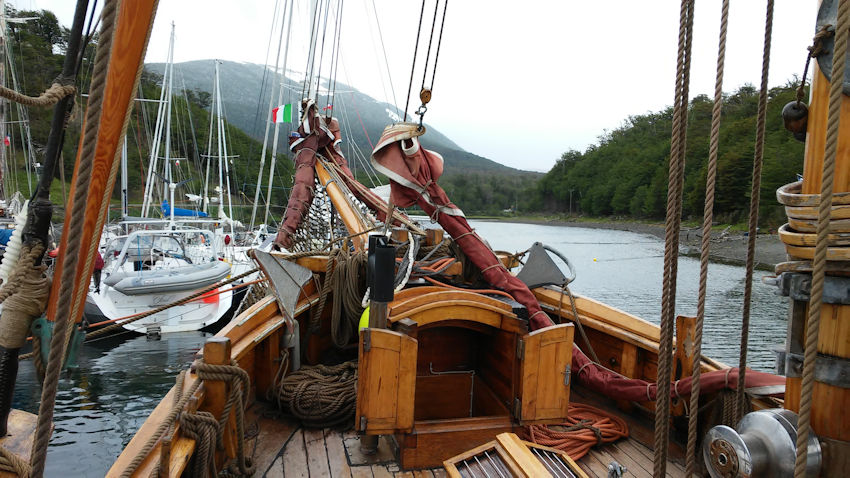

Puerto Williams


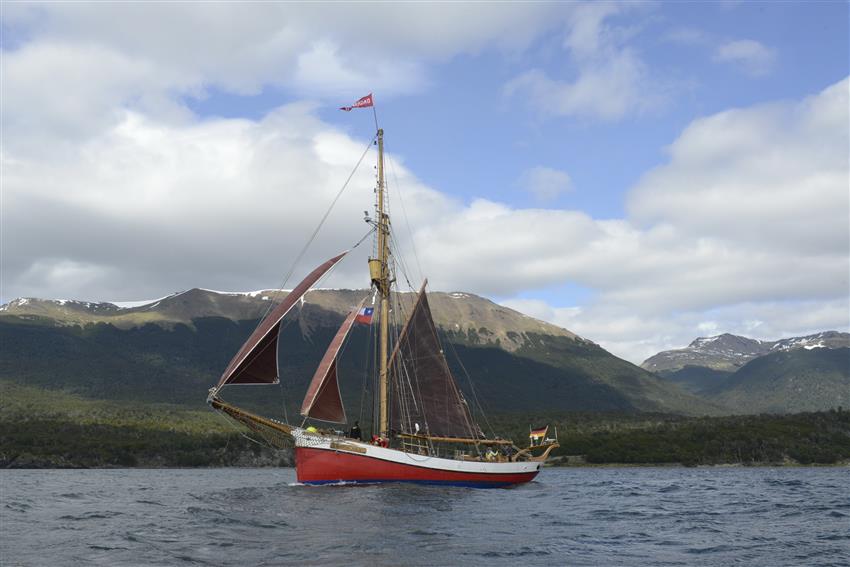
 The storm is still with us. Especially impressive are the Williwaws – squall lines which tear through the mountains with an unimaginable force, whip up the water, tear at the mooring lines and crush the fenders almost to the point of bursting.


We are safe here but everyone on board would like to get on. But that would be simply foolish. I don’t envy the skippers of chartered ships whose passengers are nervously considering their time budgets. To the Antarctic and back in just over three weeks and this storm. Time is running out.


Osvaldo is in a better situation. He is the owner and skipper of the “Polarwind” – an extremely stable and well-equipped sailing yacht. Osvaldo is Chilean and is fluent in German - and several other languages – and he is familiar with this sailing area like almost no other person. Osvaldo knows every corner and hiding place. He offers trips to the Chilean canals and to Cape Horn. This is much more relaxed and calculable that a trip over the Drake Passage.
He provides us with the latest weather forecasts which he gets directly from the Chilean navy. He has been blown into Puerto Williams at the moment just like the rest of us. The Chilean navy sometimes closes the harbor off during especially violent storms. The harbor was open for a short while today – it is now closed again. The weather is supposed to improve on the weekend. Then we hope to venture over the Drake Passage. Henryk, our Polish friend, said: “Calm is sacred, only the foolish are in a hurry”.  This especially applies to this sea area.


Arved Fuchs

foto_mix_result20140101174700.jpg

20.01.2016: Caletta Martial


Caletta Martial


The first days of the New Year can be seen under the motto „patience“ and  „waiting“. From New Year’s Day on, the crew on board the “Dagmar Aaen” had to hold out in the Chilean town Puerto Williams. Storms of up to 90 knots made leaving for Cape Horn impossible. Peter Sandmeyer and Harald Schmitt inevitably needed help from the navy to reach the cape at all – still they were on site making a documentary on the 400th anniversary of the cape for NG Deutschland. They are both now back in Germany; Micha Stockmann has also left the ship.


In exchange a new trio has joined us – Hartmut Schäfer and Rainer Kerzig are two experienced sailors who have been on earlier expeditions. Tim B. Frank is back again as well. Getting to the ship, however, it was necessary to remain patient. After landing in Ushuaia, the ferry to Puerto Williams stopped its surface at short notice and the trip was delayed in arriving on board the ship. Arved Fuchs and his crew were finally able to leave the harbor of Puerto Williams on Sunday. Destination – crossing the Drake Passage to the Antarctic Peninsula.


But during the crossing the conditions were again pretty bad and Fuchs decided to seek shelter in the Caletta Martial Bay. The bay belongs to a group of islands – the Hermiten Islands which lie 80 km south of Puerto Williams. The islands are named after the Dutch admiral Jacques L’Hermite.


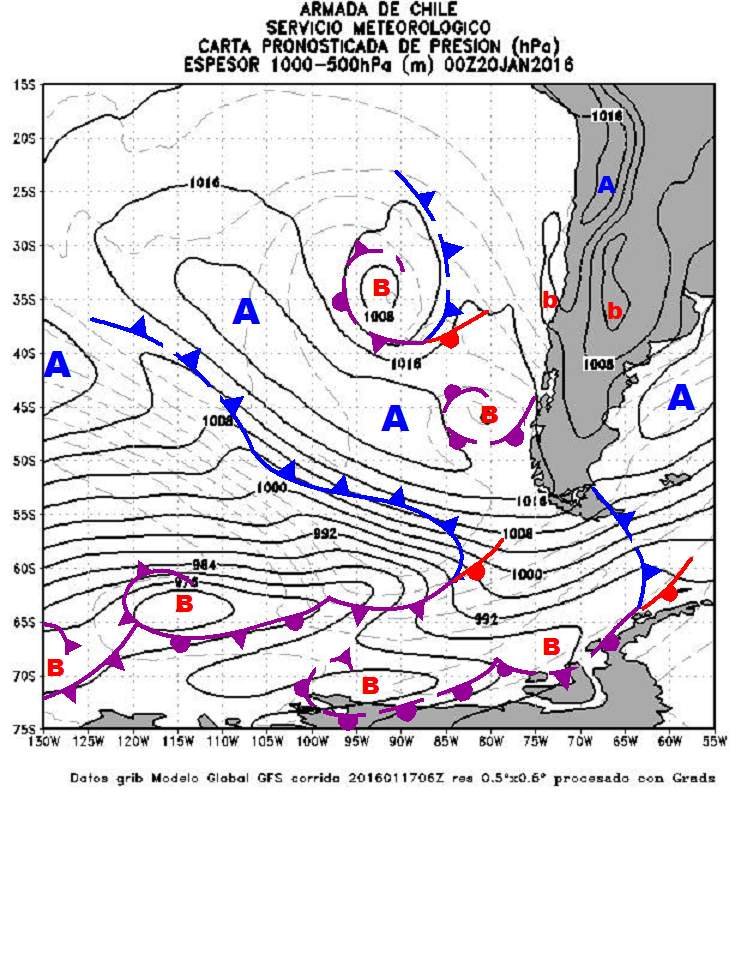
This means waiting again. “The going was pretty rough” was Fuchs’ comment on the actual weather while the ship lay at anchor. The crew must wait for the right weather window. Had Fuchs risked heading out for the crossing on Monday, they would have run into a strong wind field coming from south-west just south of 60°. The weather data change every twelve hours. Fuchs is now going to wait until Friday to tackle with the Drake Passage.


Till then it’s a matter of getting weather and GRIB reports several times a day and studying Chilean weather charts (photo - © www.directmar.cl) ...


_kap_horn_mahnmal_p40.jpg

24.01.2016: Cape Horn


The Cape of Storms


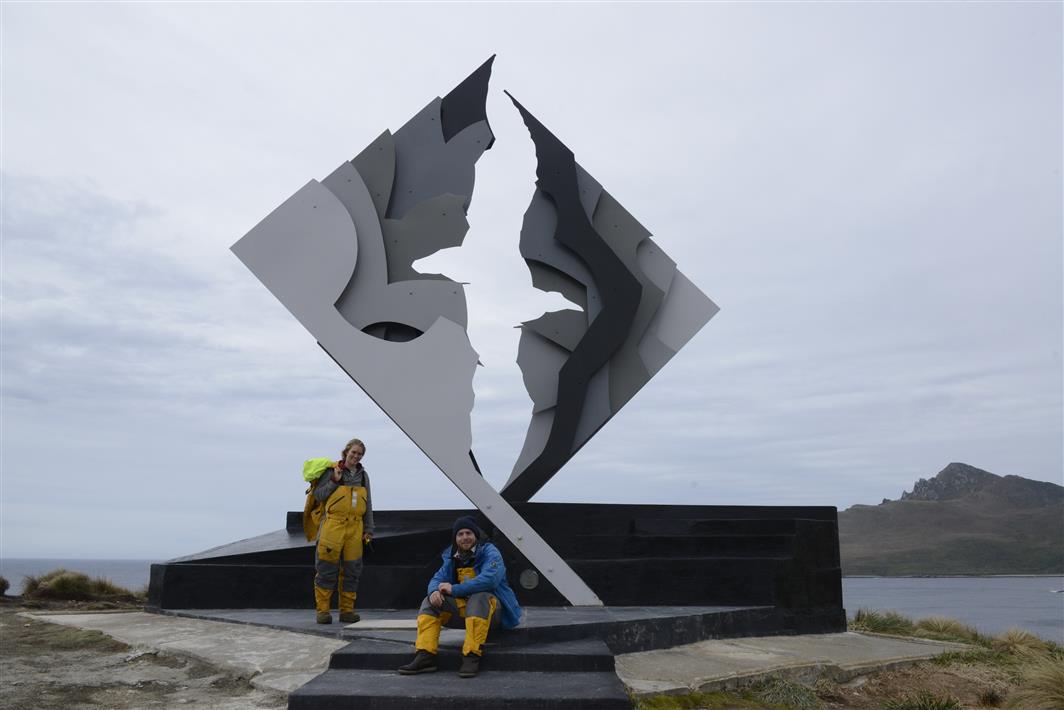
Cape Horn is true to its reputation – we are all of this opinion here on board. For days now one low pressure area after another is passing through with winds of gale force. We had intended to set out for the Antarctic on Saturday but the meteorologists strongly advised us not to do this – and they were right! The air pressure in the centre of the low pressure area measured 965 hPa with wind speeds of up to 50 knots and wind seas measuring 4-5 meters which met with heavy swells. It is a good idea to wait.


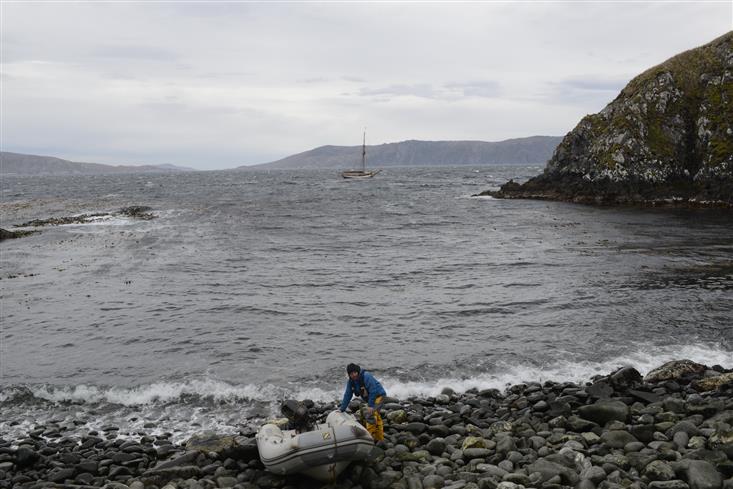
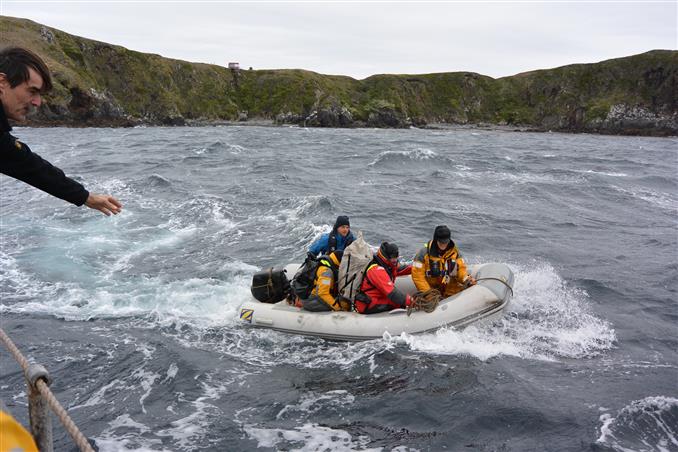
During a short pause in the storm, we were able to land on Hornos Island. This wasn’t easy either considering we had winds from the north of all things and the bay we wanted to land in was open to the north side. Brigitte, Frauke, Volker und Pablo went on land with the dingy while the rest of us on board held the “Dagmar Aaen” in position. They had one hour and then I had to call them back quickly because the winds and the seas were getting rougher again.


Caletta Maxwell


Right now they are rushing so to speak to get as many impressions as possible of the area while we on board are anxiously following the weather development. The four were hardly on board when the   gusts of wind increased to 40 knots and we hurriedly got to Caletta Maxwell (55°49,445 S/067°30, 585 W) on Hermite Island. This small bay offers protection from all wind directions and so we moored with a bow anchor and two shore lines.


In the meantime, the air pressure is rising again and on Monday or Tuesday a high pressure ridge is expected which means favourable winds for us. We are all crossing our fingers. Everyone is a little annoyed with the waiting and wants to finally reach the Antarctic. But impatience is never a good advisor – especially not here in the Cape Horn region. However, the outlook seems favourable – as favourable as you can expect for the Drake Passage.


Arved Fuchs

030216_02.jpg

03.02.2016: Cuverville Island


Cuverville Island


Our long wait finally came to an end last week and we left the protective bay at Cape Horn late in the day on Monday to master the Drake Passage. The crossing to the southern Shetland Islands took close to four days, whereby we could always count on ideal weather forecasting. This led to a relatively fast crossing. Our destination was Half Moon Island, a small sickle-shaped island which represents the crater rim of an old volcano.


From there, under increasing winds, we reached Deception Island where we took the opportunity of visiting an old whaling station. From 1910 to 1931 this was the southern-most whale oil station in the world operated by the Norwegian Hector Whaling Company.


Last evening the winds increased and with gusts of over 50 knots and wave heights of 4-5 meters it was rough going once more – we were strongly shaken about. But it became clear once again that the “Dagmar Aaen” is a seagoing vessel and she has a super crew that works excellently together.


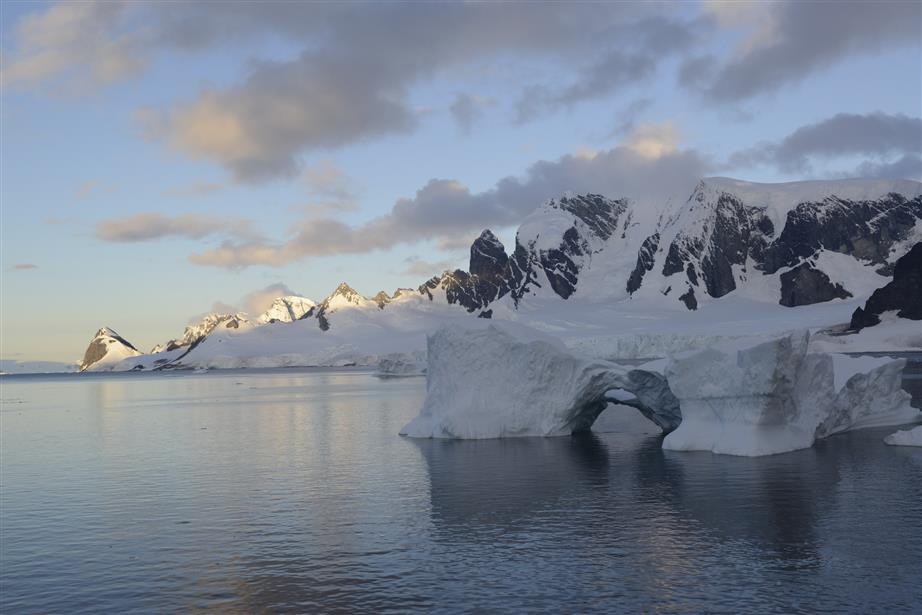
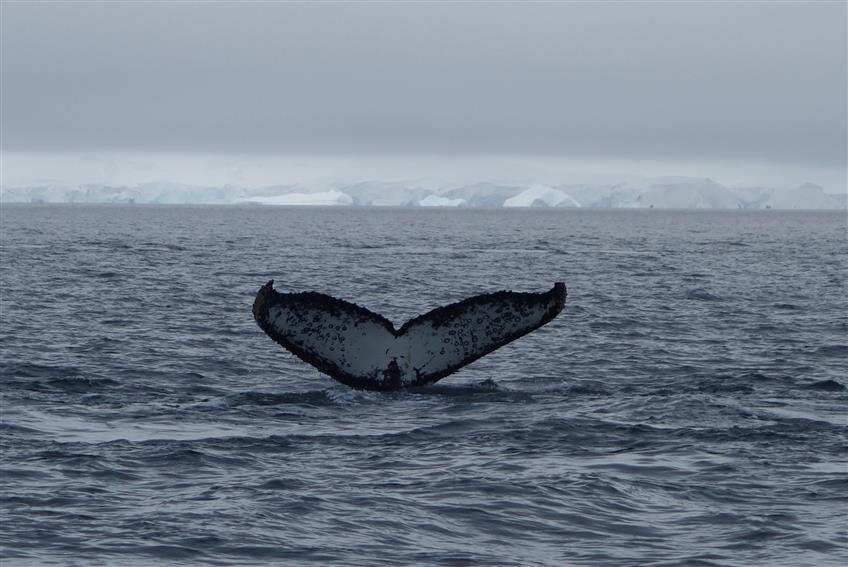
The scenery here is spectacular. All around us we have glaciated mountains and in addition to that, we were delighted at having three hunchback whales beside the “Dagmar Aaen” we could marvel at. They seemed to totally enjoy the stormy weather and jumped up time and time again – fascinating.
It is now 11:10 pm – it is slowly getting dark and there is a total lack of wind. Some of the mountain peaks are red in the sinking sun. We are on our way to Cuverville Island in the middle of the Gerlach Strait – we hope to arrive at 8 o’clock UTC.


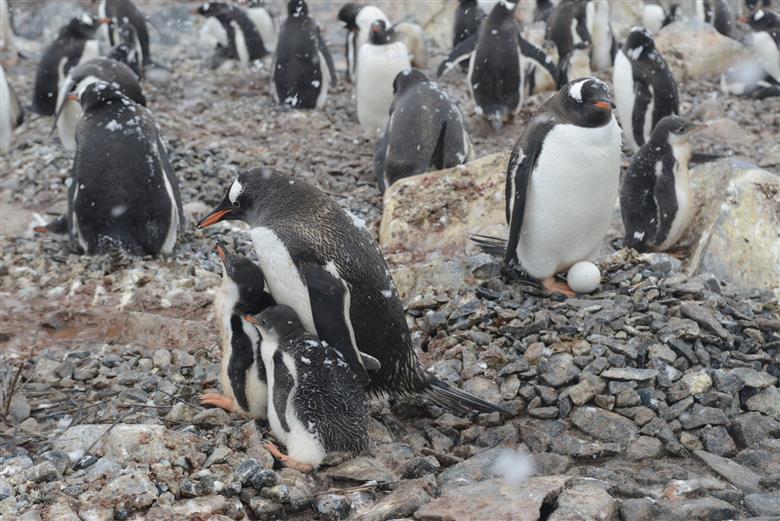
cuverville_pinguine_p40.jpg

08.02.2016: Melchior Islands


Kajak-Expedition


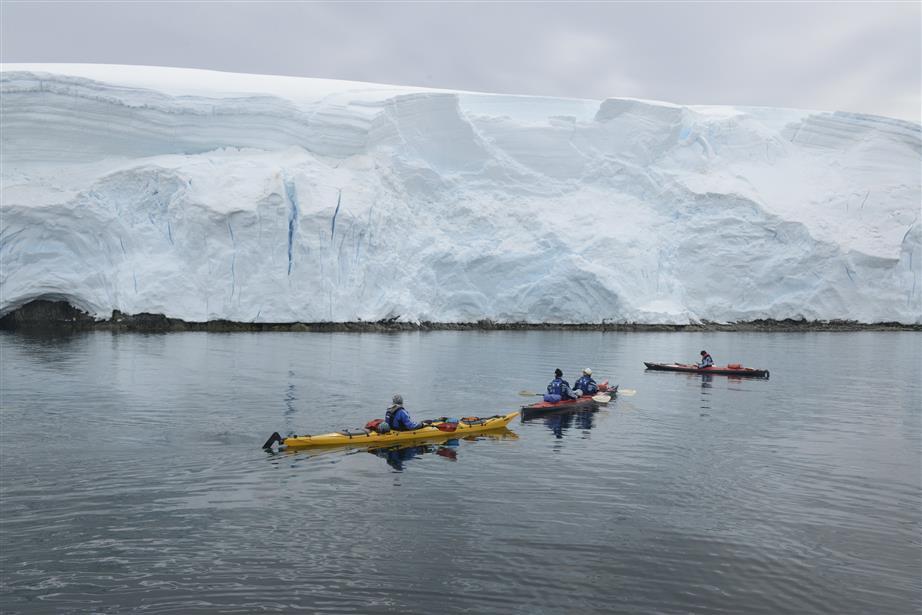
Last week we had our planned meet-up off Cuverville Island with the cruise ship “Fram” from the shipping line Hurtigruten (photo). Five friends of ours were on board, among them Henryk Wolski, who in the past 25 years has often shared adventures with us – for example the Northwest Passage, the Northeast Passage, the Shackleton Tour and other expeditions. Tomek, Karin, Tessa and Wilfried were also on board. The five of them plan a kayak expedition and we had arranged to take them to their starting point on the Melchior Islands with the “Dagmar Aaen”. We will be accompanying them on some stretches as picket ship. Four kayaks – three single and one double – must be stowed on the “Dagmar Aaen” as well as tons of supplies and equipment. It is a great reunion. Besides hot showers and opulent meals on board the “Fram” we are given lots of fresh fruit and vegetables from the galley. Besides that the kayakers are planning a grill party on board the “Dagmar Aaen” with plenty of filet and all sorts of fresh things.


Eduard Dallmann


On the morning of February 4th we left Cuverville Island and 25 miles later we arrived at the Melchior Islands. These islands are made up mostly of impressive ice formations. There are sections of rocky coast to be seen at some points. The German captain Eduard Dallmann discovered these islands in 1874 with his expedition ship “Grönland”. This was quite an accomplishment considering the means available at that time. Therefore it is surprising that hardly anyone remembers this great discoverer. He was also very successful in the Arctic and the South Pacific.


Henryk and Tomek in turn discovered something a few years ago that was unknown till then. They discovered that one of the islands in this archipelago is actually two islands which are separated by a sound. We secured the ship in a small bay with an anchor and five land lines – the weather forecast called for storms once again. And actually the winds increased during the night. Luckily the kayakers had set up their tent camp beforehand, so it was just a matter or waiting for an improvement in the weather.


The storm passed over and on the 6th of February was a beautifully sunny day. The Kayakers set out at noon and we accompanied them on their first stage to Gand Island where they set up a new camp. The weather forecast for the next days is favourable – low winds but in return heavy snowfall -although it is summertime here. Today on the 7th of February, the “Dagmar Aaen” is under a thick blanket of snow and it’s “get out the shovels”. We are continuing on today!


Arved Fuchs