port_lockroy_p40.jpg

14.02.2016: Argentine Islands
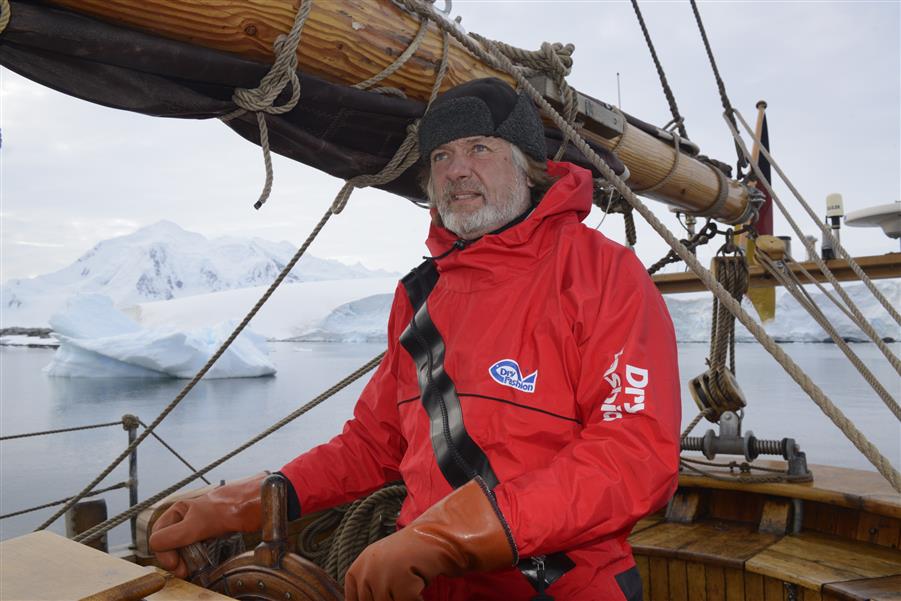

Dagmar Aaen in the land of the penguins


On Thursday the 11th of February we reached the southern-most point of our journey: 65° 15,681' S and 064° 15,6' W. The Argentine Islands, on which the Ukrainian research center Vernadsky is situated, lie here. We visited the center the previous evening. It is the oldest active station in the Antarctic. Originally founded by the English and named Farady Station, it was passed over to the Ukraine in 1996 and has been operated by them since.


It is interesting to note that it was this station that discovered the ozone hole over the Antarctic in the eighties. The station is old but is very dedicatedly operated and we were informed in detail about their scientific activities.
Following this we went up a floor to the bar which originates from the time the English were in charge. We were just about to start enjoying this comfortable part of the evening when one look out the window caused us to get up and leave immediately. The "Dagmar Aaen" lie at anchor and several big ice bergs were floating towards her. We got back to the ship as quickly as possible in order to protect her from the ice bergs. The Ukrainian scientists visited us on board the next morning to have a look at the ship - a very nice group of people and a rewarding visit.


Lemaire Channel


Continuing south, considering the ice situation and the time available to us did not seem to be a good idea. It is cooler in the Antarctic this summer although the temperature in the area of the peninsula has risen up to 5 °C in the past 15 years. The Ukraine scientists had informed us of this. There have been many storms and periods of bad weather this summer which have caused a lot of ice to remain near the cost.


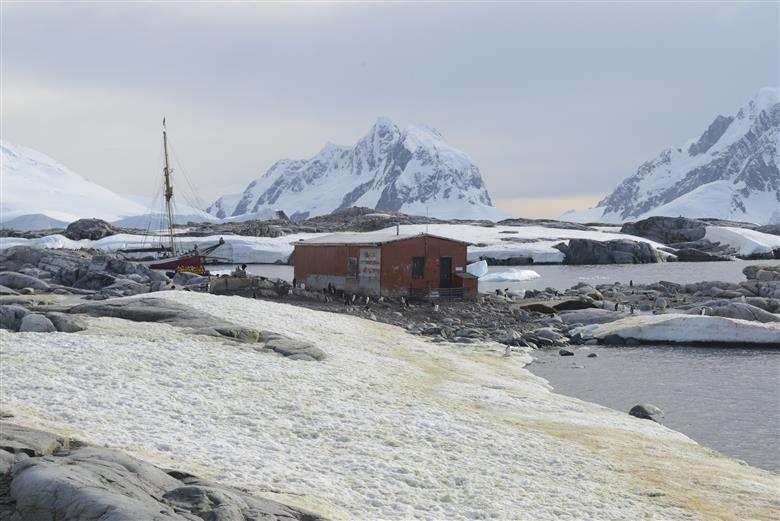
We also visited Petermann Island (photo) on the way to the Vernadsky Station. It is interesting that many of these islands were discovered by the German captain Eduard Dallmann in the years 1873/74 with his ship the "Grönland". Dallmann has really made history not only in the Antarctic but also in the Arctic and the South Pacific. He was a very interesting person and dealing with him is well worthwhile.
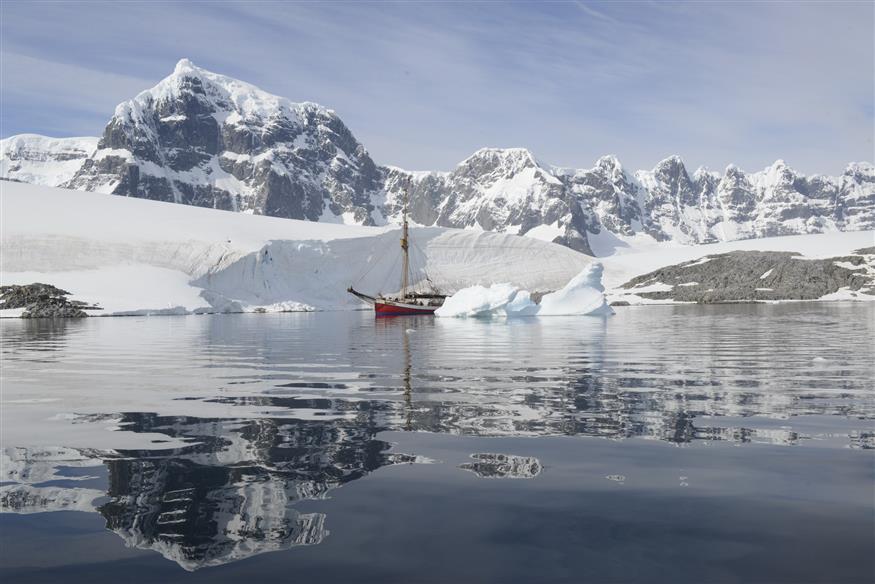


We passed through the Lemaire Channel for the second time yesterday - a breathtaking passage through a steep glaciated mountain range. Today we lie at anchor at Port Lockroy (photo) and are studying the weather forecast for the Drake Passage. We are heading for the Melchior Islands tomorrow and will sit and wait there for a favourable weather period. At the moment it looks like stormy weather again. We will see what the coming days bring...


Arved Fuchs

140316_01.jpg

13.03.2016: Isla Noir


Isla Noir


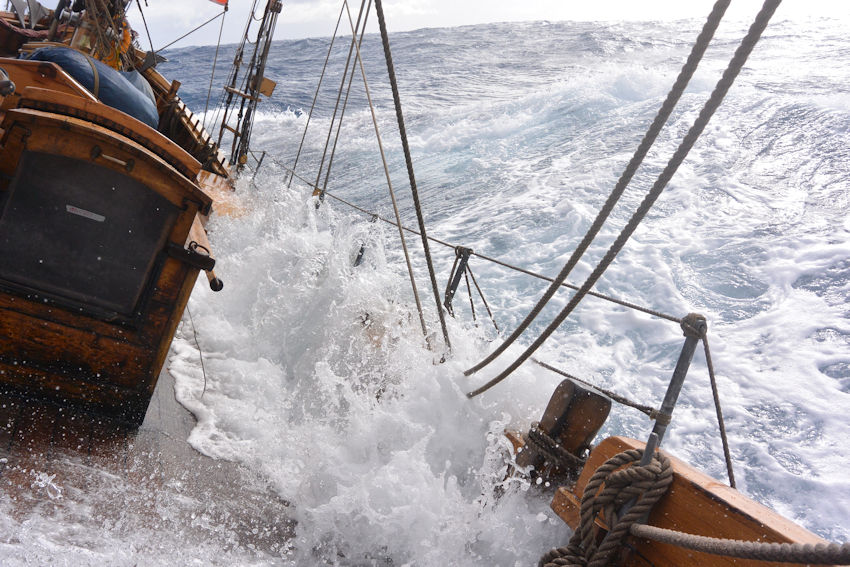
Isla Noir with its large rockhopper penguin-colony remains beyond reach for us. We approached to a distance of 25 nautical miles and then the weather ultimately turned our plans upside down. Waves of four meters in height and winds up to 45 knots made a landing impossible. It is very frustrating. We have fought our way here but the weather forecasts persisted with storm warnings. The fact that there is an unusually high number of storms here - even considering the local circumstances - is cause for many discussions and talks in the harbours at Ushuaia and Puerto Williams.


Even skippers who have travelled here for years with their yachts just shake their heads. "Can this be an effect of the El Niño phenomenon?" Many brood over this question. I don't know - maybe this is just a bad year. I plan to speak to meteorologists when I get back. To expose a ship to these wind and sea disturbance conditions and land is in any case impossible. In addition, Isla Noir is situated in a region which is largely uncharted and is fittingly referred to as "Milky Way".


It is called this because the high Pacific waves continually break in countless riffs and depths which gives the sea a white, milky appearance - a nightmare for sailors. A further problem is the steady rainfall. In order to be able to attach the small transmitters to the penguins, the animals must be dry. A combination of dry and mostly moderate weather is just not being offered right now.


Ildefonso


Our scientist on board, Dr. Klemens Pütz, is disappointed just like the rest of us. This is his second failed attempt to reach the island. To wait longer would not have made sense because bad weather is expected for at least another week. What happens then no one knows - forecasts cannot be made that far in advance. That is why we sailed back to Puerto Williams to request a permit from the Chilean navy for the island Ildefonso. There is also a colony of rockhopper penguins living there.


We are not all sure if we will make it there considering the weather situation. The island lies west of Cape Hoorn - at the moment waves with a height of 8 meters and a wind force of 10 - 11 is expected there. The penguins will not wait for us. In about two weeks the last of them will be leaving the island to spend the southern winter in the ocean. It would seem, though, that we might have more moderate weather next weekend. We are going to move to a waiting position near Cape Hoorn and cross our fingers and hope that the weather god just might come around.


Arved Fuchs

220316_02.jpg

22.03.2016: Puerto Williams


Penguin project


The penguin project has been completed - unfortunately not successfully.


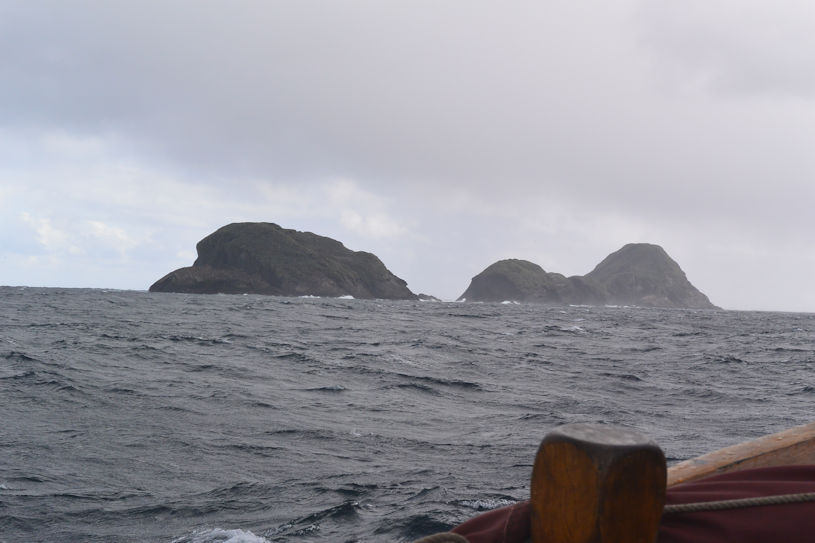
The continuing stormy weather in the whole Cape Hoorn region caused our plans to land on the Isla Noir, Ildefonso (photo) and Diego Ramírez to fail. Although, despite the rough weather, the "Dagmar Aaen" was able to reach the Ildefonso Islands with the biologist Dr. Klemens Pütz on board, rough seas of up to four meters and strong winds made a landing out of the question. Even setting out the dingy was too dangerous.


The islands lay south-west of Cape Hoorn and are so small that they offer no protection from the high seas. Furthermore they are extremely steep so that a landing is difficult even by moderate sea conditions. Under the conditions we were up against, any attempt at landing would have been life-threatening.


The plan was to attach small transmitters to rockhopper penguins in order to follow their oceanic migration routes during the winter. Dr. Klemens Pütz specializes in penguin research and had hoped to visit these islands, which are so difficult to reach, with the "Dagmar Aaen" and attach transmitters to some of the penguins. Stormy weather also made a landing on the Diego Ramírez Islands impossible. Some scientists on another ship managed to reach a rockhopper penguin colony on the Staaten Islands, which belong to Argentina, and attach transmitters to some of the animals there. The islands we headed for belong to Chile and are especially exposed to westerly winds and storms.


In total the "Dagmar Aaen" and her crew covered a distance of 628 sea miles for this research project. The penguins have finished moulting now and there is no point at making another attempt. The penguins have left the islands and are now migrating in the ocean.
Despite the dedicated efforts on the part of everyone involved, this project did not end successfully. This hurts and everyone is disappointed but it is also necessary to live with defeat. Once again it has become obvious that the weather around Cap Hoorn is not to be taken lightly.


Arved Fuchs

240516_01.jpg

24.05.2016: Rio de Janeiro


Rio de Janeiro


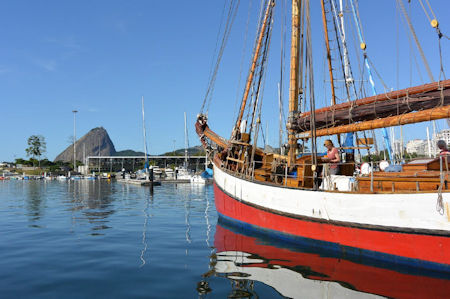
With Heimir as our captain and following an unexpected time-consuming clearance in Piriápolis, we headed north for Brazil. Temperatures are increasing and life on deck is slowing filling up with life and music.


Besides a huge swarm of dolphins, we saw a shark which was not really interested in us. We had originally planned to clear at San Sebastio to explore what is probably the most beautiful bay in Brazil with over 350 islands to the north. But the authorities were not prepared for private ships and therefore this did not work out.


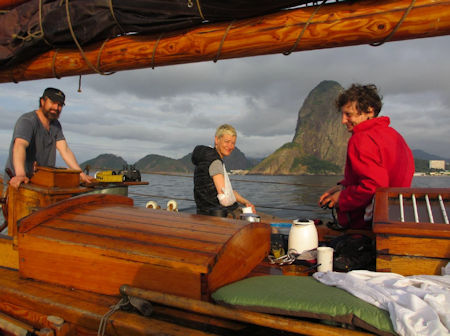
So we then headed under sail directly to Rio and arrived with the sunrise and with breakfast in our hands we rolled passed Ipanema and the Copacabana as well as the statue of Christ and the Sugarloaf Mountain.  Rio de Janeiro is an unbelievably big city embedded in fantastic scenery. Unfortunatly the quality of the water leaves much to be desired. This is not only due to the garbage which floats of the water’s surface. Here in the Marina de Glória the stink speaks volumes.


Sugarloaf Mountain, the statue of Christ, Santa Teresa, Lapa, Centro and the Copacabana - there is a lot to see and discover. Especially the artists’ quarters Lapa and Santa Teresa are as worth a visit as the spectacular lookout points on the Sugarloaf and at Corcoyado (the statue of Christ). One or the other Caipirinha should not be missed either.


To make up for the failed attempt at anchoring near Ilha Grande, we spent the night in Angra Dos Reis and got a small glimpse at Brazil’s Atlantic Caribbean.


Elise und Lauren

120416_01.jpg

12.04.2016: Ushuaia


Ushuaia


As always, time is just flying by. We have been in Ushuaia for almost three weeks and boredom is not an issue. There are as usual many things to repair and bring to order on board. Besides that we are getting provisions onto the “Dagmar Aaen” in preparation for the next stage to Piriápolis (Uruguay)


Still there remains enough time to get to know the people and the country. We found out for example more about the strike which has pretty well paralyzed daily life here since February. Almost all of the state employees and the teachers are on strike because their work conditions have worsened drastically. The wage increase they were promised is far from sufficient to compensate the high rate of inflation. Besides that, teachers will have to work until they are 50 years in order to retire and not until 45 which was the case until now. The special regulations which applied for Tierra del Fuego are no longer valid. Because of the strike, many public institutions are closed (swimming pools, gyms etc.) and there have been no lessons in the public schools since February.


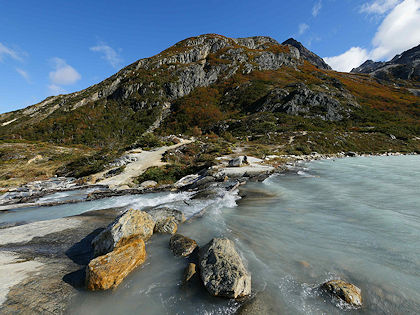
It is very loud here in Ushuaia’s harbor. This is why we enjoy our excursions even more. We have seen the wild horses on Playa Larga, the penguins on Isla Martillo. We were especially impressed by a hike we took to the Laguna Esmeralda. There is a high mountain region not ten kilometers from the sea.


National Park Tierra del Fuego


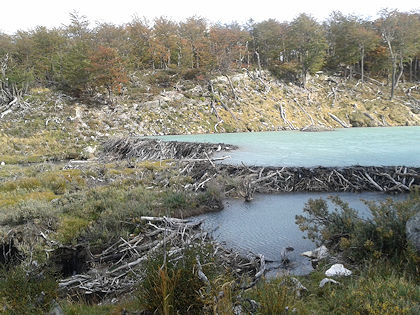
Our hike takes us through a high valley with many beaver dams. There was an attempt made during the past one hundred years to breed beavers. Because the ocean is nearby, the winters here are not nearly as cold as they are for example in North America. Therefore the beavers’ fur did not develop as thick as was expected and this project failed. The beavers have no natural enemies and have become a nuisance and difficult to get rid of.


Our tour through the Tierra del Fuego Nation Park takes us through a beautiful landscape and a diverse world of birds. A condor is circling above us. At the river we meet many Caranchos – very big birds of prey with a colourful heads and a courtship behavior which is similar to that of storks (they throw their necks far back when greeting).


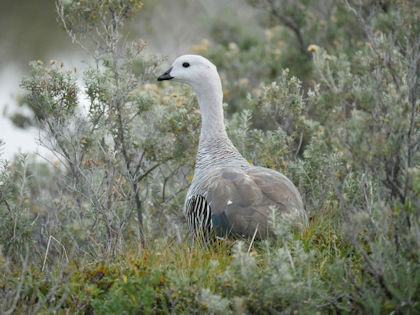
In the trees above many Cachanas (green parrots with red tails) are screeching. We also see highland geese (photo) and black-necked swans. These swans are only found in the southern parts of South America.


We all quickly agree that when Arved and the new crew arrive and take over we will take the opportunity to camp for a few days in the National Park.


Elise Fleer & Frank Mertens