


12.04.2016: Ushuaia
Ushuaia
As always, time is just flying by. We have been in Ushuaia for almost three weeks and boredom is not an issue. There are as usual many things to repair and bring to order on board. Besides that we are getting provisions onto the “Dagmar Aaen” in preparation for the next stage to Piriápolis (Uruguay)
Still there remains enough time to get to know the people and the country. We found out for example more about the strike which has pretty well paralyzed daily life here since February. Almost all of the state employees and the teachers are on strike because their work conditions have worsened drastically. The wage increase they were promised is far from sufficient to compensate the high rate of inflation. Besides that, teachers will have to work until they are 50 years in order to retire and not until 45 which was the case until now. The special regulations which applied for Tierra del Fuego are no longer valid. Because of the strike, many public institutions are closed (swimming pools, gyms etc.) and there have been no lessons in the public schools since February.
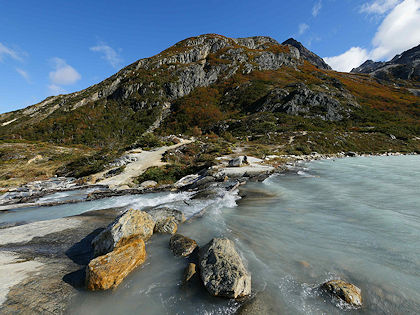
It is very loud here in Ushuaia’s harbor. This is why we enjoy our excursions even more. We have seen the wild horses on Playa Larga, the penguins on Isla Martillo. We were especially impressed by a hike we took to the Laguna Esmeralda. There is a high mountain region not ten kilometers from the sea.
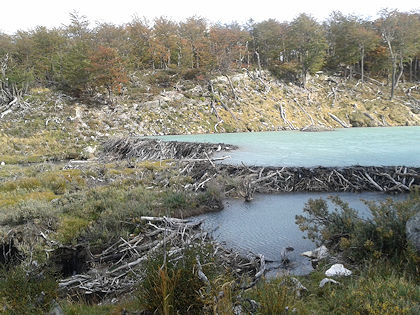
National Park Tierra del Fuego
Our hike takes us through a high valley with many beaver dams. There was an attempt made during the past one hundred years to breed beavers. Because the ocean is nearby, the winters here are not nearly as cold as they are for example in North America. Therefore the beavers’ fur did not develop as thick as was expected and this project failed. The beavers have no natural enemies and have become a nuisance and difficult to get rid of.
Our tour through the Tierra del Fuego Nation Park takes us through a beautiful landscape and a diverse world of birds. A condor is circling above us. At the river we meet many Caranchos – very big birds of prey with a colourful heads and a courtship behavior which is similar to that of storks (they throw their necks far back when greeting).
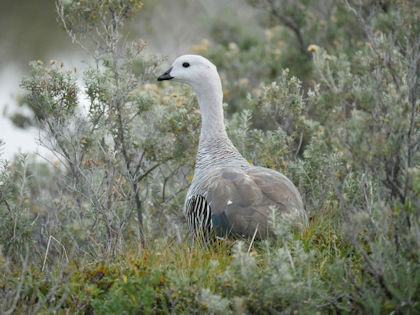
In the trees above many Cachanas (green parrots with red tails) are screeching. We also see highland geese (photo) and black-necked swans. These swans are only found in the southern parts of South America.
We all quickly agree that when Arved and the new crew arrive and take over we will take the opportunity to camp for a few days in the National Park.
Elise Fleer & Frank Mertens